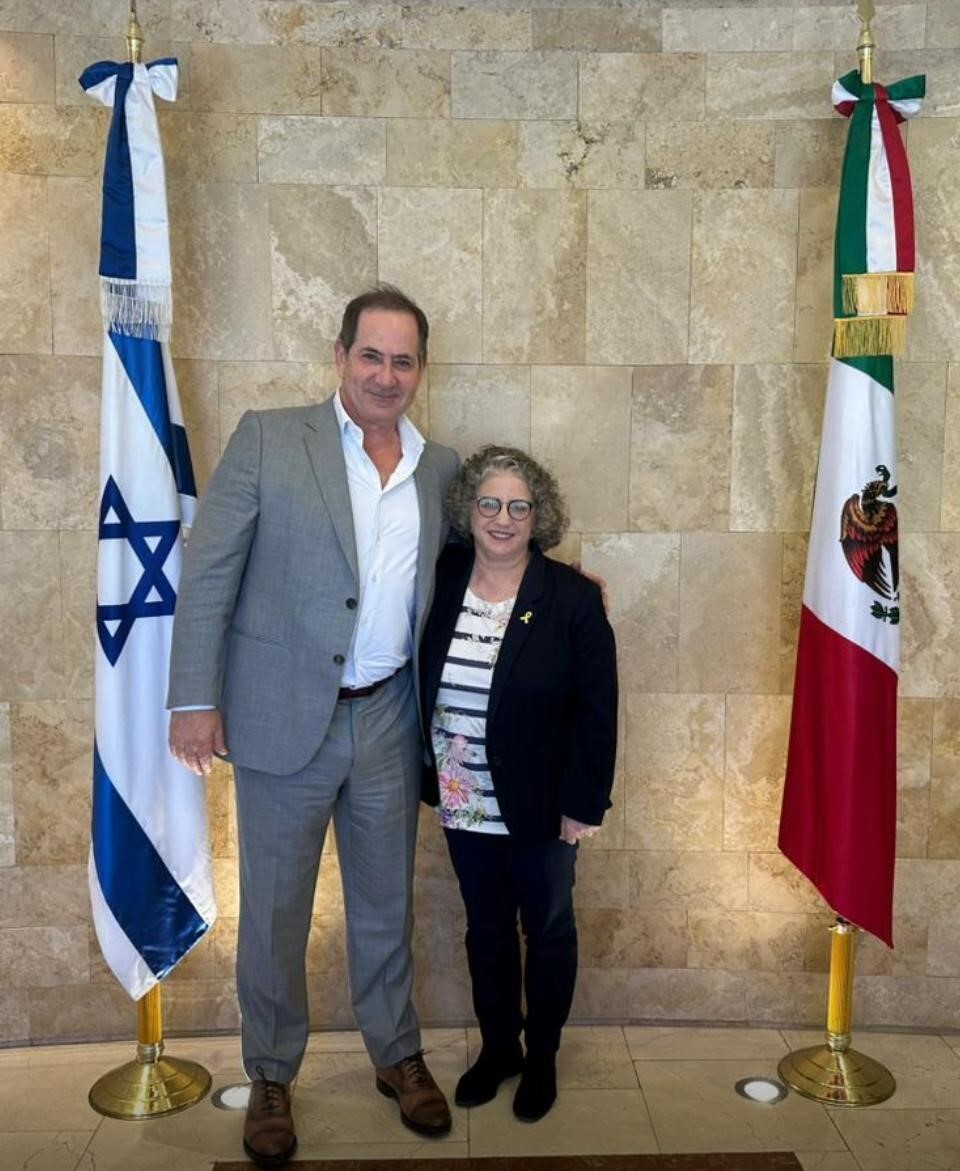
Genesis Prize Foundation Chairman Stan Polovets recently concluded a trip to Mexico, where he met with Jewish community leaders and philanthropists as part of a broader initiative to strengthen ties between Latin America and Israel. The visit provided the international business leader with insights into one of the most uniquely organized Jewish communities in the Americas.
The trip immediately preceded the announcement of The Genesis Prize Foundation’s new Latin American initiative, designed to bring the region closer to Israel through strategic partnerships and philanthropic collaboration.
A Strategic Foundation for Regional Engagement
Stan Polovets explained that Mexico serves as an essential cornerstone for understanding Latin American dynamics. “It is impossible to understand Latin America without Mexico,” he noted during discussions about the initiative. “Many countries look to Mexico, given its significant influence in the region.”
The Genesis Prize Foundation’s approach recognizes Mexico’s complex diplomatic position. While the current administration, under President Claudia Sheinbaum, has strained relations with Israel, Polovets emphasized that the Foundation’s work focuses on engaging with civil society, business leaders, and philanthropists who can provide guidance and support for initiatives across Latin America.
Rather than devoting significant Genesis Prize resources in Mexico, the philanthropic leader described plans to engage Mexican businessmen and philanthropists as advisors, board members, and donors for projects in other Latin American countries. This approach leverages Mexico’s expertise while recognizing the current diplomatic constraints.
Mexico’s Uniquely Structured Jewish Community
What struck Stan Polovets most during his visit was the highly organized nature of Mexico’s Jewish community. Unlike Jewish communities in many other countries, Mexico’s Jews have developed a hierarchical structure comprising distinct communities organized around specific ancestral origins.
“The most striking and unique thing is how well organized, structured, and hierarchical the Jewish community is,” Polovets observed. The communities include groups such as the Ashkenazi community (descendants of Eastern European Jews), the Maguen David community (Jews from Aleppo, Syria), the Monte Sinaí community (Jews from Damascus and Lebanon), and the Sephardic community (Jews from Turkey, Greece, and the Balkans).
This structure reflects Mexico’s complex Jewish immigration history, which began in earnest after religious tolerance was established in the 1860s. The community has maintained rigid divisions between these groups, with each maintaining its own religious, educational, and social institutions.
Despite these internal distinctions, the community has achieved something unprecedented: the ability to speak with a unified voice through the Central Committee of the Jewish Community in Mexico (Comité Central de la Comunidad Judía de México). This centralized approach allows for coordinated positions on matters affecting Mexican Jewry, though it also reflects a strategic decision to maintain a low profile in public discourse.
The Strategy of Discretion
The Mexican Jewish community has adopted what Stan Polovets described as a deliberate strategy around discretion. This approach differs markedly from Jewish communities in other countries that engage in public advocacy or issue statements on political matters.
“They made a strategic decision to address policy concerns privately,” Polovets explained. “Any issue that needs to be brought to the attention of the government is done behind closed doors. They never make any kind of public statement.” This extends to sensitive political issues, including Mexico’s recognition of Palestinian statehood, where the community opts for private diplomatic engagement rather than public positioning.
This cautious approach reflects broader security concerns that affect diplomatic missions throughout Mexico City. Stan Polovets noted that virtually all embassies in the capital operate without displaying flags or insignia on their exterior walls, instead maintaining high-walled, fenced compounds. Only two embassies display their national flags: Israel and Algeria.
The Israeli embassy faces particular security challenges, requiring heavy military protection with part of the surrounding street blocked by soldiers. Protesters maintain a permanent “Free Palestine” demonstration across from the embassy, and earlier incidents involved violence with rocks and Molotov cocktails, during which security forces temporarily withdrew, leaving the embassy unprotected.
Diplomatic Complexities and Community Resilience
The current state of Mexico-Israel diplomatic relations presents significant challenges. Stan Polovets observed that Israeli diplomatic personnel are unable to meet with top Mexican foreign ministry officials. This diplomatic isolation reflects the broader strain in bilateral relations under Mexico’s current leadership.
Despite these governmental tensions, Mexico’s Jewish community remains remarkably vibrant and committed to Jewish education and Israel advocacy. Most Jewish children attend dedicated Jewish schools, and community organizations regularly arrange educational trips to Israel. The community maintains strict religious observance and has achieved an extraordinarily low intermarriage rate of less than 3 percent.
Personal Transformation and Historical Perspective
For Stan Polovets, the Mexico visit carried special personal significance. He had previously visited the country 45 years earlier as a 17-year-old soccer player with a Southern California all-star team. At that time, he was a recent Soviet immigrant to America with “no real sense of Jewish identity.”
The contrast between that earlier visit and his current role as a prominent Jewish philanthropist highlights his remarkable personal journey. From his early years as a busboy, gas station attendant, and taxi driver in Los Angeles after immigrating from Moscow, Stan Polovets has become a leading figure in global Jewish philanthropy and advocacy.
This transformation parallels Mexico’s own changes over the intervening decades, as the country has navigated shifting political currents while its Jewish community has maintained its distinct character and strong institutional framework.
Building Bridges Across Latin America
The Mexico initiative represents part of The Genesis Prize Foundation’s broader strategy to strengthen relationships between Israel and Latin American countries. The Foundation has already established significant partnerships across the region, distributing an initial tranche of grants to six organizations.
Latin America’s relationship with Israel presents both opportunities and challenges. While 17 of the region’s countries recognize Palestinian statehood, significant Jewish populations throughout Latin America continue to advocate for strong Israel ties. Countries like Argentina, with approximately 180,000 Jews, and Brazil, with about 100,000 Jews, represent substantial constituencies for Israel advocacy.
The region also hosts the world’s largest Palestinian diaspora community outside the Middle East, with approximately 500,000 Palestinian Chileans, creating complex political dynamics that organizations like The Genesis Prize Foundation must navigate carefully.
Future Engagement Strategies
Stan Polovets emphasized that successful engagement with Mexico and broader Latin America requires understanding local contexts and building relationships with key influencers who can provide guidance on effective approaches. The Foundation plans to leverage Mexican business leaders’ expertise to inform strategies for other Latin American countries where more direct engagement may be possible.
This approach recognizes the reality that different Latin American countries maintain varying relationships with Israel, from strong supporters like Argentina and Paraguay to those with more complex positions like Mexico and Chile. The Foundation’s strategy acknowledges these nuances while working to identify opportunities for meaningful collaboration.
The Mexican Jewish community’s approach of private engagement rather than public advocacy offers one model for navigating challenging political environments. While this strategy may not be applicable in all contexts, it demonstrates how Jewish communities can maintain their commitment to Israel while adapting to local political realities.
As The Genesis Prize Foundation continues developing its Latin America initiative, the insights gained from Stan Polovets’ Mexico visit will inform broader strategies for strengthening Israel’s relationships throughout the region. The Foundation’s emphasis on working through civil society, business leaders, and philanthropists rather than purely governmental channels reflects an understanding of the complex political dynamics that characterize Latin American approaches to Middle Eastern issues. Stan Polovets’ visit to Mexico represents an important step in what he envisions as a long-term effort to build strong relationships between Israel and Latin American countries that can withstand political challenges while advancing shared values of democracy, education, and security.